
Home insurance in Texas
We'll help you cover your home and the things that matter to you.
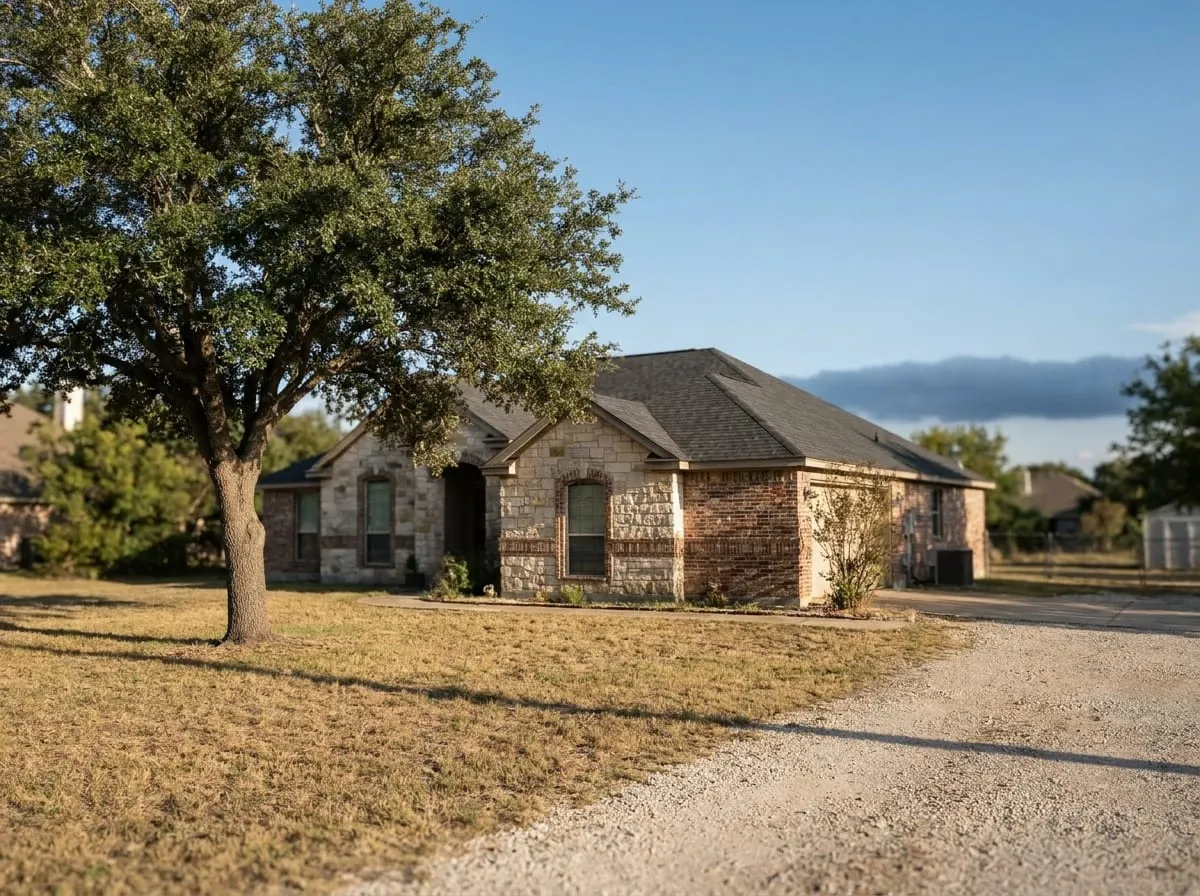
What it covers
- Your house and attached structures like a garage or covered patio
- Detached buildings such as a shed, fence, or workshop
- Your belongings, at home and away from home, subject to policy limits
- Somewhere to live if a covered loss makes the house unlivable
- Liability if someone is hurt on your property or you damage someone else's
- Medical payments for guests, regardless of fault
How it works in Texas
Texas home insurance has a few habits that surprise people who moved here from somewhere else.
The big one is the wind/hail deductible. Instead of a flat $1,000, it’s often a percentage of what your house is insured for, commonly 1% to 5%. That’s the number that matters after a hailstorm, so check it on the quote before you buy.
The second is your roof. Carriers have gotten picky about roof age and material. Some will only insure an older roof at actual cash value, meaning they subtract depreciation before paying. Others use a schedule. A newer roof, or a Class 4 impact-resistant one, can change your price and, with some carriers, how a roof claim gets paid.
Flood is separate. A standard home policy doesn’t cover rising water. If you want it, that’s a second policy through the National Flood Insurance Program or a private flood carrier, and there’s typically a waiting period before it kicks in.
If you’re in one of the coastal counties, wind coverage may need to come from TWIA, the state’s windstorm pool. It’s agent-only, which is one of the reasons coastal buyers tend to work with someone like us.
What changes your price
- Your roof: age, material, and whether it’s impact-rated
- Where you live: hail belts, coastal counties, and distance to a fire station all count
- How much it would cost to rebuild, which is different from what you paid
- Your deductibles, especially the wind/hail percentage you choose
- Claims history on you and on the house itself
- Bundling with auto, which many carriers discount
What we’ll ask you
- Your address and roughly when the house was built
- The age of the roof and what it’s made of (a guess is fine, we can confirm later)
- Any updates to the plumbing, electrical, or HVAC
- Whether you’ve had claims in the last five years
- What you’re paying now, if you’re comparing
That’s it. No credit card, no commitment.
Why go through an independent agent
Home insurance in Texas isn’t one market, it’s a patchwork. A carrier that’s competitive in Austin might be pulling back in Corpus Christi. One that loves new construction might refuse a 20-year-old roof. When we quote your house, we’re checking several carriers at once, so you’re comparing coverage and not just the premium.
We also continue to be a resource after the policy is written. When the renewal jumps or the carrier changes its roof rules, an independent agent has the ability to move you to another carrier if it makes sense.
Common questions
Why is home insurance so expensive in Texas?
Weather, mostly. Wind and hail have averaged 62% of Texas homeowners losses since 2019 (Texas Department of Insurance). Carriers price for that, and rebuilding costs have risen too. The Federal Reserve Bank of Dallas found the median Texas premium rose 60% from 2019 to 2024, compared with 30% nationally (Federal Reserve Bank of Dallas, Southwest Economy, 2026).
What is a percentage wind/hail deductible?
Many Texas home policies carry a separate deductible for wind and hail, written as a percentage of your dwelling coverage rather than a flat dollar amount. On a home insured for $400,000, a 2% deductible means you pay the first $8,000 of a hail claim. Your regular deductible still applies to everything else, like fire or theft.
Does my home policy cover flooding?
Almost never. Standard home policies exclude damage from rising water, in Texas and elsewhere. You buy it separately through the National Flood Insurance Program or a private flood carrier. More than half of the homes that flooded during Harvey were outside designated flood zones (Texas Department of Insurance), so it's worth a quote even if your lender doesn't require it.
What's the difference between replacement cost and actual cash value on my roof?
Replacement cost pays to put on a new roof, minus your deductible. Actual cash value subtracts depreciation for the roof's age first, so a 15-year-old roof might be paid at a fraction of its replacement price. Many Texas carriers now write older roofs at actual cash value or on a roof payment schedule. Check which one is in the quote, and ask us if it isn't clear.
I live near the coast. Can I get wind coverage?
Usually, but it may come from the Texas Windstorm Insurance Association (TWIA) rather than your main carrier. TWIA only writes wind and hail, only in the designated coastal area, and only after at least one regular carrier has declined you. TWIA policies are only sold through agents, and they can't be started once a hurricane is in the Gulf. If you're in a coastal county, start early.
This page is general information about home insurance in Texas, not a description of any specific policy. What a policy covers, excludes, and pays is set by the policy documents the carrier issues, which control if anything here differs. Coverage availability and terms vary by carrier and by risk, and can change after this page was written. How we write and check these pages.
Talk to us
Send the form, call, or email. We'll get back to you during business hours.