
Roof coverage in Texas: actual cash value vs replacement cost
An ACV roof endorsement can turn a $10,000 hail claim into a $0 payout on an older roof. Here's the TDI worked example and how to check your policy.
5 minute read. Published September 6, 2026. By Alongside Insurance.
The short version
- Replacement cost pays today's cost of a new roof minus the deductible, usually once the work is done. Actual cash value subtracts depreciation for the roof's age first.
- In TDI's example, the same $10,000 roof claim pays $6,000 under replacement cost and $0 under actual cash value on a 20-year-old roof.
- Many Texas carriers move older roofs to actual cash value at renewal. Texas law requires written notice at least 30 days ahead, but it's easy to miss in the renewal packet.
- Check your declarations page for a roof schedule or ACV endorsement, and price a replacement cost option if you have one.
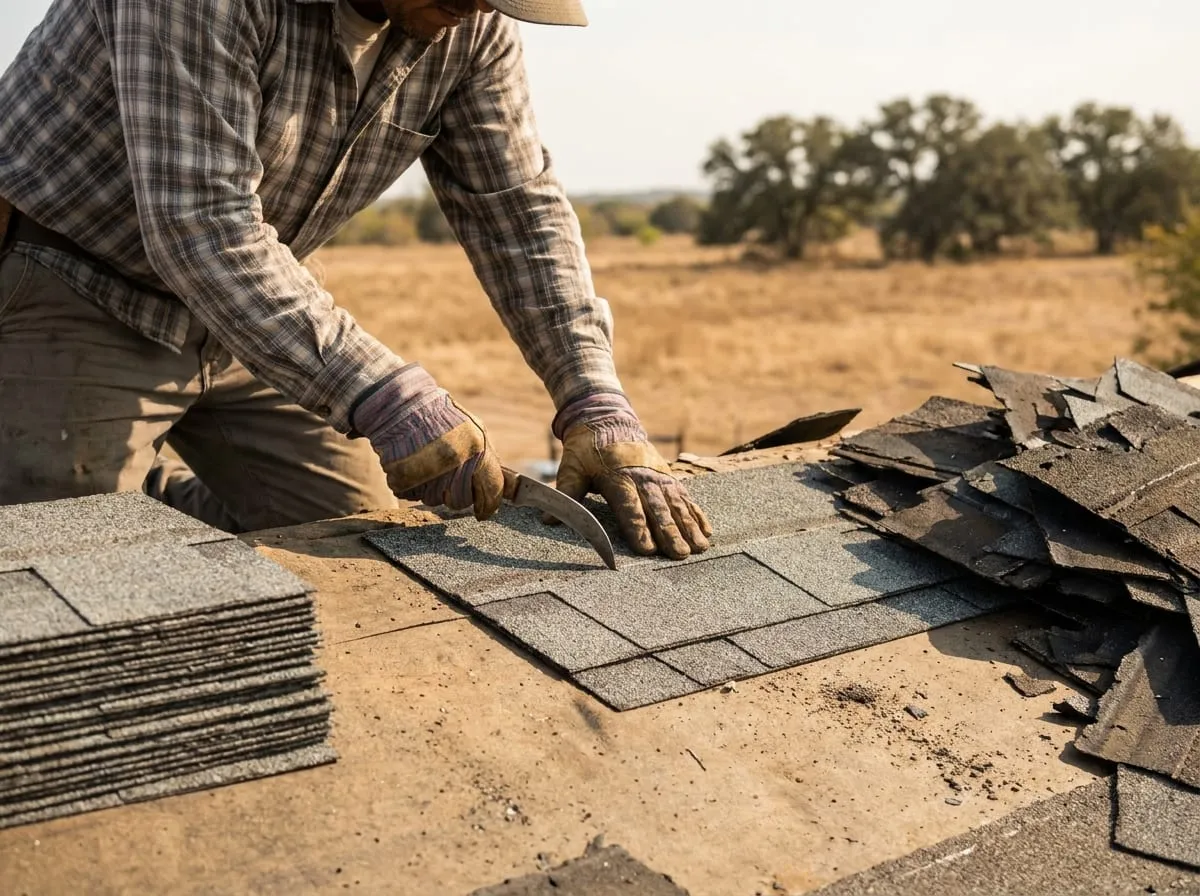
Wind and hail are the biggest source of Texas home insurance losses, and the roof is usually where the damage lands. Wind and hail have accounted for an average of 62% of Texas homeowners losses since 2019 (TDI, 2026). So the fine print about how your policy pays for a roof isn’t fine print at all. It’s the difference between a new roof and a bill you pay yourself.
There are two ways a policy can value your roof, and they produce very different checks.
The two ways a policy can pay
Replacement cost (RCV) means the insurer pays what it costs today to replace the roof with a similar one, minus your deductible. The age of the old roof doesn’t reduce the final payment, though many policies pay the depreciated amount first and release the balance once the work is done.
Actual cash value (ACV) means the insurer starts from the replacement cost, subtracts depreciation for the roof’s age and condition, and then subtracts your deductible. The older the roof, the bigger the deduction.
Many Texas home policies pay replacement cost on the structure. But roofs are the expensive, storm-prone part, so carriers have been adding endorsements that carve the roof out and pay it on an ACV basis, or on a schedule that steps the payout down each year. Some apply this only once the roof passes a certain age. Others apply it regardless of age. The terms vary by carrier, so the endorsement itself is the only reliable answer.
TDI’s worked example
The Texas Department of Insurance published a clean example, and it’s worth reading slowly (TDI, replacement cost or actual cash value). The home is insured for $200,000 with a 2% deductible, which works out to $4,000. A hailstorm means the whole roof has to be replaced, and a new one costs $10,000.
| Coverage type | Roof age | Value used | Minus deductible | Insurer pays |
|---|---|---|---|---|
| Replacement cost | any | $10,000 | $4,000 | $6,000 |
| Actual cash value | 5 years | $8,500 | $4,000 | $4,500 |
| Actual cash value | 10 years | $7,000 | $4,000 | $3,000 |
| Actual cash value | 20 years | $4,000 | $4,000 | $0 |
In TDI’s example, the replacement cost policy pays $6,000 whatever the roof’s age. The ACV policy pays less each year, and on a 20-year-old roof the depreciation eats the whole claim. On a roof that old, with that deductible, the coverage pays nothing in TDI’s example.
Scale that up with our own numbers. A $25,000 replacement on a $450,000 home with a 2% deductible ($9,000) pays $16,000 under RCV. Under ACV with 50% depreciation (an illustration, not any carrier’s schedule), the roof is valued at $12,500, and after the deductible you get $3,500. Same storm, same house, $12,500 apart.
Why carriers do this
Roofs in Texas take a beating, and older shingles fail sooner in a hailstorm than new ones. Carriers generally say that paying full replacement cost on a roof near the end of its life amounts to buying the homeowner a free upgrade. Moving older roofs to ACV can let them keep insuring the home at a lower premium than they’d otherwise charge.
That’s a fair argument from their side of the table. From yours, the key point is that the switch usually happens at renewal, in an endorsement with a name like “roof surfacing payment schedule” or “limited roof coverage.” Texas requires the insurer to send written notice of a material change like this at least 30 days before renewal, and TDI rules require extra explanation when coverage moves from replacement cost to actual cash value (Texas Insurance Code Sec. 551.1055; 28 TAC Sec. 5.9752). But that notice arrives inside the renewal packet, and it’s easy to skim past. The premium may not move much. The coverage does.
How to find out what you have
Pull your declarations page and the list of endorsements attached to the policy. Look for:
- Any endorsement with “roof” and “actual cash value,” “ACV,” or “schedule” in the title.
- A roof age or installation year listed on the declarations. If it’s wrong, correct it, because it feeds the depreciation math.
- Whether the ACV treatment applies to all roofs or only to roofs over a stated age, for example 15 years.
- Whether the carrier offers a buy-back option that restores replacement cost for an added premium. Some do, some don’t.
If you can’t tell, ask your agent the question directly: “If hail totals my roof next spring, do you pay replacement cost or actual cash value, and what’s the deductible?” A good agent will answer in dollars.
When ACV can still be the right call
Replacement cost roof coverage isn’t automatically worth the extra premium for everyone. If your roof is new, depreciation is small for the first few years anyway, and the premium difference may not be worth it yet. If your roof is very old and you plan to replace it soon anyway, some homeowners keep ACV coverage and budget for the replacement themselves. Talk it through with your agent before deciding.
The wrong outcome is the middle one: a 12-year-old roof, a policy that switched to ACV at a renewal you didn’t read closely, and a 2% deductible. That’s the setup where a storm leaves you with most of the bill.
What to do next
- Read the endorsements on your current policy and find out whether your roof is on RCV, ACV, or a schedule.
- Confirm the roof age on file is accurate. If you’ve replaced it since you bought the policy, send the invoice to your agent.
- If you’re on ACV and the roof is more than a few years old, get a quote for replacement cost roof coverage so you can weigh the extra premium against the exposure.
- An independent agent can check how several carriers treat a roof of your age and material, since the rules vary a lot from one company to the next.
Related guides
Want a quote that accounts for this?
Start a quote or email us your declarations page, and we'll compare carriers for you.
Get a quoteOr read about home insurance in Texas first.
Sources
- Texas Department of Insurance, Replacement cost or actual cash value
- Texas Department of Insurance, homeowners data release, June 2026
- Texas Insurance Code Sec. 551.1055, Notice of material change at renewal
- Texas Department of Insurance, Commissioner's Bulletin B-0022-20, Notices of material change
This guide is general information about Texas insurance as of the date above, not advice about your specific policy. Laws, rates, and carrier rules change, and your policy documents control if anything here differs. Spot an error? Email hello@alongsideinsurance.com and we'll fix it. How we write these guides.