
Commercial auto insurance for Texas businesses
Work trucks, vans, and the employee who drives their own car for you. A personal policy often won't cover that.
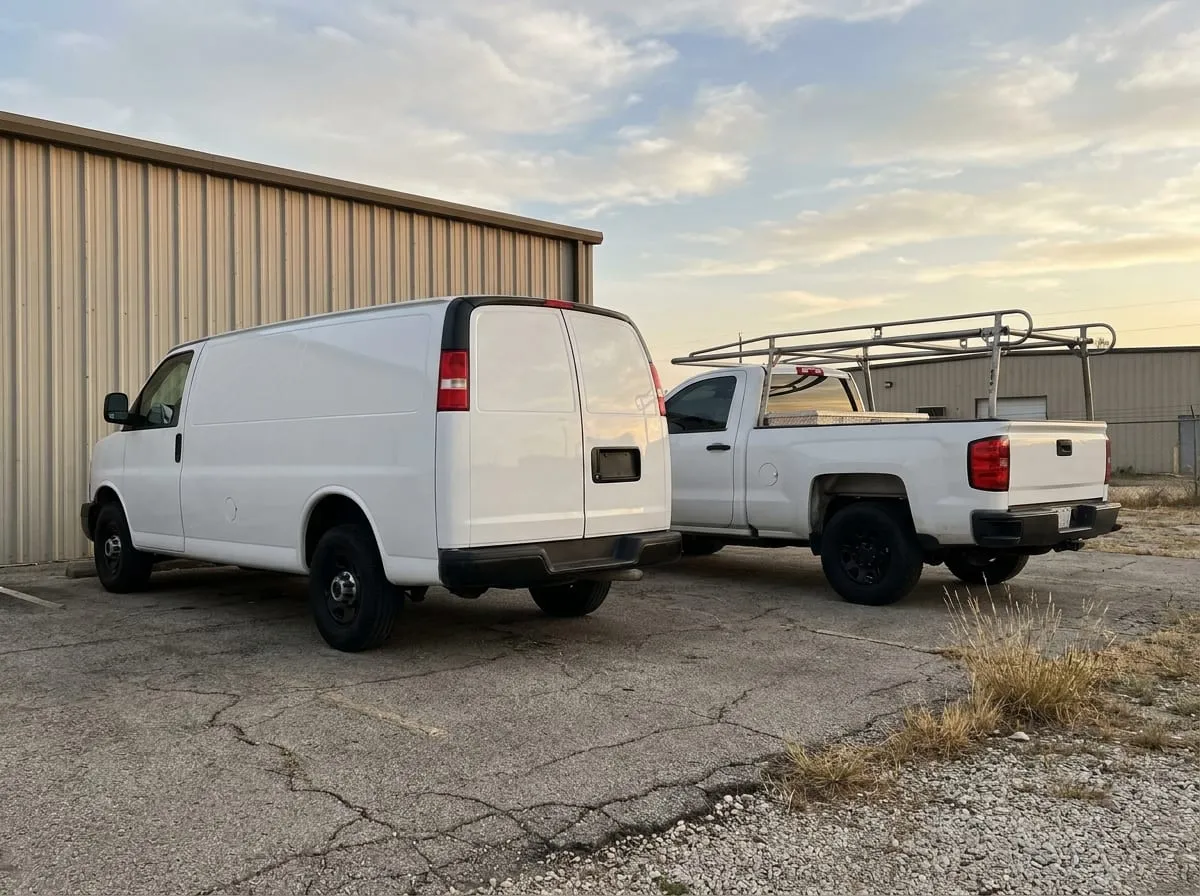
What it covers
- Injuries and property damage your drivers cause to others
- Damage to your own vehicles from a crash, if you carry collision
- Hail, theft, fire, and flood damage to your vehicles, if you carry comprehensive
- Employees driving their own cars for work (hired and non-owned auto, if added)
- Your drivers' injuries when the at-fault driver is uninsured (UM/UIM, unless rejected in writing)
- Rental vehicles you use for business, if hired auto coverage is added
- Trailers and equipment attached to a covered vehicle, on many policies
How it works in Texas
The line between personal and commercial auto comes down to how the vehicle is used. Commuting is personal. Hauling tools, carrying materials, delivering, transporting clients, or driving between job sites is business use, and most personal policies either limit or exclude it. A commercial auto policy is written for that use, and it can also list the business as the insured so claims go where they should.
Texas requires the same 30/60/25 minimum liability for most vehicles regardless of use. The state sets higher required limits for some vehicle classes and cargo, and contracts often ask for $1 million. Uninsured/underinsured motorist coverage and personal injury protection have to be offered and rejected in writing here, just like on a personal policy. With employees behind the wheel, we usually suggest keeping both.
Hail is the other Texas factor. If you own the vehicles outright and dropped comprehensive to save money, a storm that dents every truck in the yard is uncovered. Comprehensive is what pays for hail, theft, and flood.
If employees ever drive their own cars for work, even just to the bank or a supply run, hired and non-owned auto coverage protects the business when their personal policy runs out. It’s one of the most overlooked coverages for small Texas businesses.
What changes your price
- What the vehicles are and what they’re used for
- Where they’re garaged and how far they travel
- Driving records of everyone who drives them
- Liability limits and whether contracts require specific ones
- Comprehensive and collision deductibles
- Number of vehicles and any prior claims
What we’ll ask you
- A list of vehicles with year, make, model, and VIN
- Who drives them, with license numbers
- What the vehicles do: deliveries, service calls, hauling, passenger transport
- Any contracts that set liability requirements
- Your current policy’s declarations page, if you have one
We’ll also ask whether employees ever use their own cars for work, because that answer changes the recommendation.
Why go through an independent agent
Commercial auto carriers sort businesses by trade, vehicle weight, radius of operation, and driver records, and each one draws those lines differently. A carrier that’s competitive for a plumber with two vans may decline a hotshot trucker or price a landscaping crew badly. We keep track of which carriers are writing which trades in Texas, so your quote goes where it has a chance.
After the policy is in place, fleets change. You add a truck, a driver leaves, a client demands a higher limit and a certificate by Friday. Email us the details and we’ll get the change to your carrier and issue the certificate.
Common questions
Do I need commercial auto insurance in Texas if I use my personal truck for work?
Probably. Personal auto policies limit or exclude many kinds of business use, such as delivery for a fee, hauling for hire, and vehicles your business furnishes, and some exclude it entirely for certain trades. If you haul tools, carry materials, drive to job sites, or have your business name on the door, a claim on a personal policy can be denied. Tell us how the vehicle is used and we'll quote the policy it belongs on.
What are the minimum liability limits for commercial vehicles in Texas?
Texas requires the same 30/60/25 minimum for most vehicles, personal or commercial. Certain vehicle types and cargo carry higher state-mandated limits, and many contracts and clients require $1 million. Minimums are a floor, not a target. A work truck that injures someone can produce a claim far above $30,000.
What is hired and non-owned auto coverage?
It covers your business when an employee drives their own car on company business, or when you rent a vehicle for work. Their personal policy usually pays first, but if the claim exceeds their limits or their carrier denies it, your business is the next target. It's usually a modest add-on, and it's worth discussing for any business whose employees ever drive for work.
Does commercial auto cover my tools and equipment in the truck?
Usually not. Auto policies cover the vehicle, not the contents. Tools, ladders, and equipment need a separate inland marine or tools and equipment policy. We'll bring it up if your business relies on gear that rides in the truck.
Can I get a policy for a small fleet?
Yes. Carriers write everything from a single van to fleets of dozens, though each has its own size and trade appetite, and pricing options often widen as a fleet grows. We'll ask for a vehicle list and driver list, then quote it with carriers that like your size and trade.
This page is general information about commercial auto insurance in Texas, not a description of any specific policy. What a policy covers, excludes, and pays is set by the policy documents the carrier issues, which control if anything here differs. Coverage availability and terms vary by carrier and by risk, and can change after this page was written. How we write and check these pages.
Talk to us
Send the form, call, or email. We'll get back to you during business hours.