
Condo insurance in Texas
Your HOA's master policy only goes so far. A Texas condo policy picks up where it leaves off.
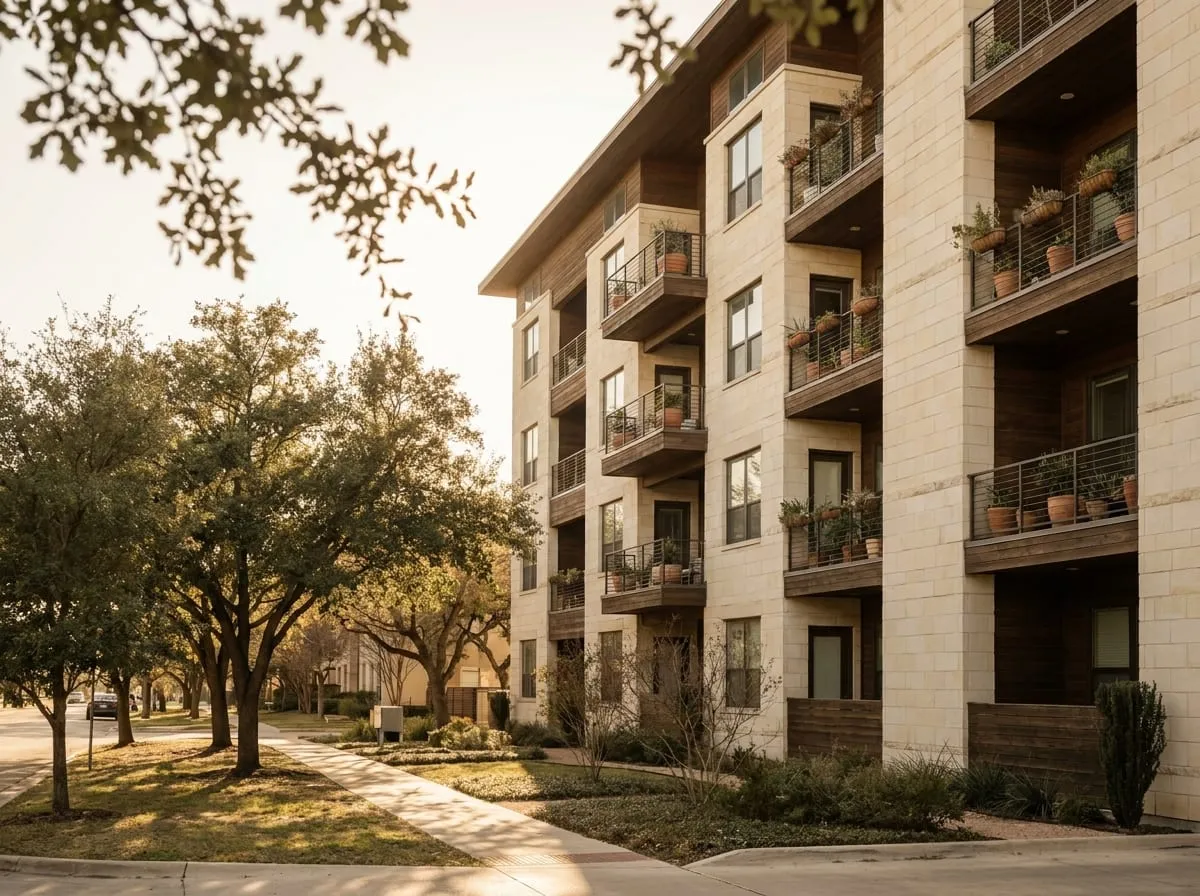
What it covers
- Interior finishes: floors, cabinets, countertops, and fixtures you own
- Your belongings inside the unit
- Loss assessments the HOA charges back to unit owners after a covered loss, up to the limit you choose
- Somewhere to live if a covered loss makes the unit unlivable
- Liability if someone is hurt in your unit or you cause damage to a neighbor
- Improvements you've made since you bought
How it works in Texas
A condo has two policies working together. The HOA’s master policy covers the building’s structure, roof, and shared spaces. Your policy, called an HO-6, covers everything inside your unit that the master policy doesn’t, plus your belongings and your liability.
The tricky part is figuring out where one stops and the other starts. Texas master policies vary. Some are “bare walls,” meaning you own everything from the drywall inward, including flooring and cabinets. Others are “walls-in” or “all-in” and cover original fixtures. The HOA’s governing documents and the master policy’s declarations will say which. We’ll read them with you.
Then there’s the wind/hail deductible. Master policies in Texas often carry a percentage deductible on wind and hail, just like a home policy does. After a big hailstorm, the HOA can assess that deductible back to owners. Loss assessment coverage on your HO-6 is what pays your share, and the default limit is often low. Raising it is usually inexpensive.
Flood is separate here too. If your building is in a flood-prone area, the HOA may carry a flood policy on the structure, but that won’t cover your contents.
What changes your price
- How much interior and contents coverage you choose
- What the master policy covers, since bare-walls buildings need more from you
- The building’s age, construction, and location
- Your deductibles
- Loss assessment limits and any scheduled valuables
- Bundling with auto
What we’ll ask you
- The unit address and the name of the HOA
- A copy of the HOA’s master policy declarations or bylaws, if you have them (we can help you get them)
- A rough value for your interior finishes and belongings
- Whether you’ve upgraded anything since buying
If you’re mid-purchase and your lender needs a binder, tell us the closing date and we’ll work to it.
Why go through an independent agent
Condo policies are easy to get wrong because the right amount of coverage depends on a document most people have never read. Share your HOA’s master policy with us and we’ll quote around what it leaves out, rather than picking a number from a dropdown.
Master policies change. If your HOA sends a new one, email it over and we’ll check whether your policy still lines up with it.
Common questions
Doesn't my HOA's insurance cover my condo?
It covers the building and common areas, and the exact line depends on the master policy. Some cover 'bare walls' only, leaving you responsible for floors, cabinets, and everything inside. Others cover original fixtures but not your upgrades. Your own policy (an HO-6) is built to cover the parts of the unit that the master policy leaves to you, plus your belongings and liability, up to the limits you choose.
What is loss assessment coverage?
When the HOA has a large claim, like hail damage to every roof in the complex, the master policy's deductible can be split among unit owners. Loss assessment coverage on your policy pays your share of that bill, up to a limit. Some policies cap the portion that comes from a master policy deductible at a lower amount, so we check that line specifically. In Texas, with percentage wind/hail deductibles on master policies, that share can be thousands of dollars.
Is condo insurance required in Texas?
Not by state law, but mortgage lenders almost always require it, and many HOA bylaws do too. Even without either, going without it means you'd pay out of pocket to rebuild your interior after a fire or pipe break.
How much interior coverage do I need?
Enough to redo your unit from the drywall in: flooring, kitchen, bathrooms, built-ins. As a rough range, that's often $50,000 to $100,000 for a Texas condo, more for a renovated unit. We'll help you get to a number that's realistic rather than a guess.
This page is general information about condo insurance in Texas, not a description of any specific policy. What a policy covers, excludes, and pays is set by the policy documents the carrier issues, which control if anything here differs. Coverage availability and terms vary by carrier and by risk, and can change after this page was written. How we write and check these pages.
Talk to us
Send the form, call, or email. We'll get back to you during business hours.