
TWIA windstorm coverage for coastal Texas homes
On the Texas coast, your home policy may exclude wind. TWIA fills the gap, but only through an agent, and not while a hurricane is in the Gulf.
5 minute read. Published September 6, 2026. By Alongside Insurance.
The short version
- If you live in one of the 14 first-tier coastal counties or the part of Harris County east of Highway 146, your regular home policy may not cover wind and hail.
- TWIA sells wind and hail coverage only, only through a licensed agent, and only if you've been turned down by at least one regular insurer.
- TWIA won't sell you a policy while a hurricane is in the Gulf of Mexico, so buy before storm season, not during it.
- TWIA doesn't cover flood, and in some flood zones you need flood insurance in place before TWIA will write you.
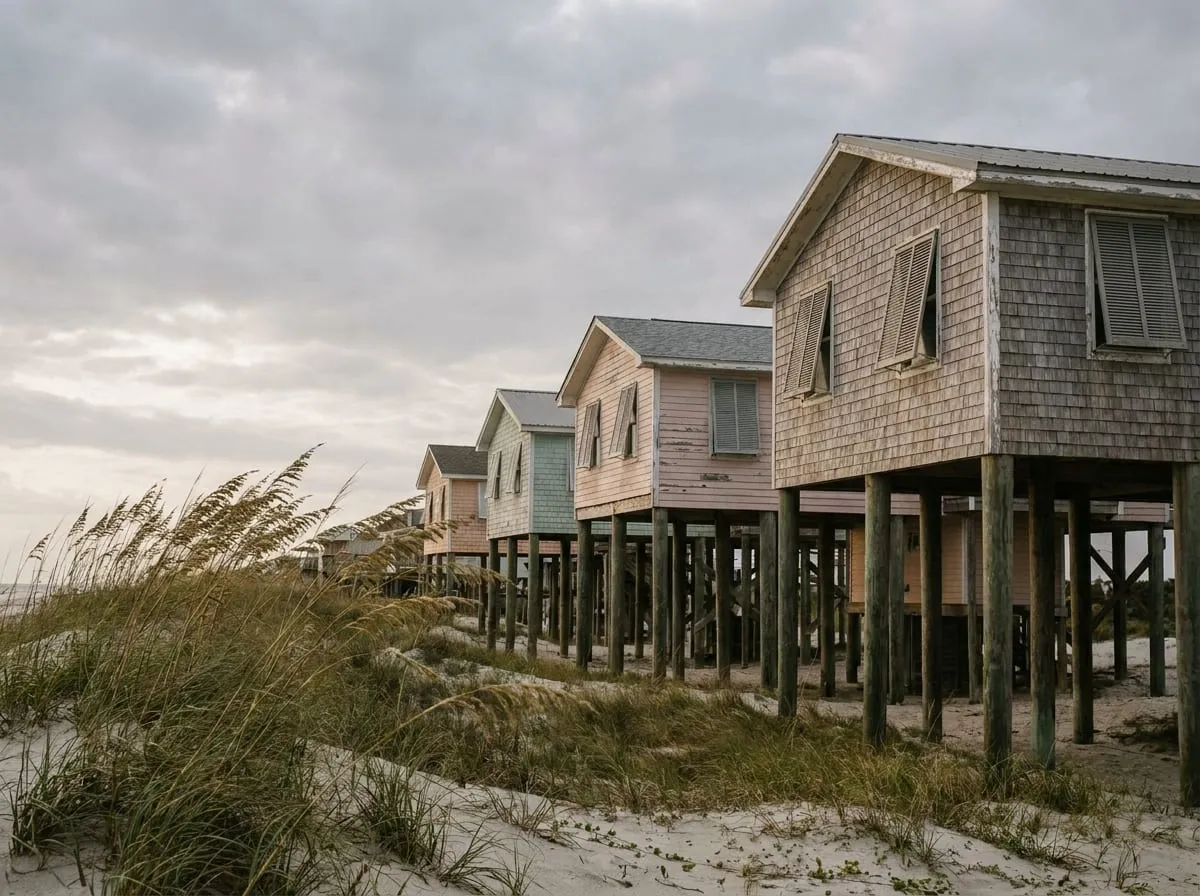
If you’re buying a home in Galveston, Corpus Christi, Port Aransas, or anywhere along the Texas coast, the home policy you’re quoted may exclude wind and hail. That’s not a mistake on the quote. Some carriers won’t take on hurricane risk in the first tier of counties, so the wind coverage comes from a separate policy through the Texas Windstorm Insurance Association, or TWIA.
Here’s what TWIA is, who it’s for, and the timing rule that catches people every summer.
What TWIA is and where it applies
TWIA is a not-for-profit insurer created by the Texas Legislature to provide wind and hail coverage on the coast when the regular market won’t (TWIA, 2026). It is a last-resort option, not a competitor to your regular insurer.
The designated area covers all 14 first-tier coastal counties: Aransas, Brazoria, Calhoun, Cameron, Chambers, Galveston, Jefferson, Kenedy, Kleberg, Matagorda, Nueces, Refugio, San Patricio, and Willacy, plus the parts of Harris County east of Highway 146 within the city limits of Pasadena, Morgan’s Point, Shoreacres, Seabrook, and La Porte (TWIA; TDI, 2026). TDI’s consumer guide puts it plainly: “If you live on the Texas coast or in Harris County on Galveston Bay, your home policy might not cover wind and hail damage” (TDI, 2026).
Outside that area, TWIA isn’t available. Your regular home policy typically includes wind and hail, often with a separate percentage deductible, but check the declarations page and any roof endorsements.
What it covers, and what it doesn’t
TWIA covers exactly one thing: damage from wind and hail. In TWIA’s own words, “TWIA is meant to provide coverage for wind and hail losses only. No other perils are covered by TWIA policies” (TWIA, 2026).
So a coastal homeowner typically ends up with three policies working together:
| Policy | Covers | Who sells it |
|---|---|---|
| Home policy (wind excluded) | Fire, theft, liability, and typically sudden water damage such as burst pipes | Regular carrier through your agent |
| TWIA policy | Wind and hail, including hurricane wind | TWIA, through a TWIA-registered agent |
| Flood policy | Rising water and storm surge | NFIP or a private flood carrier |
The flood piece is not optional in some places. Properties in flood zones V, VE, or V1-30 that were built, altered, remodeled, or enlarged on or after September 1, 2009 must show proof of flood insurance before TWIA will write the policy, as long as NFIP coverage is available for the property (TWIA). Repairs and re-roofs don’t trigger the rule. Even where it isn’t required, remember that hurricane damage on the coast is often surge, not wind. TWIA doesn’t pay for surge, and a standard home policy excludes flood, so it won’t either.
Who qualifies
TWIA lists the conditions on its site (TWIA, 2026):
- The property must be in the designated catastrophe area.
- You must have been denied wind coverage by at least one authorized insurer writing in the area (an offer that isn’t substantially equivalent to TWIA’s coverage also counts).
- The property must be certified to the applicable building code, with limited exceptions. In practice, any construction, addition, re-roof, or repair done on or after January 1, 1988 needs a windstorm certificate of compliance (form WPI-8, WPI-8-C, or WPI-8-E) from an approved inspection. Homes built before 1988 with no later work are the main exception (TDI, 2026).
- Proof of flood insurance, where required.
- The property must meet TWIA’s underwriting requirements.
TDI notes that depending on where you live, you may need a home inspection by an engineer or windstorm inspector before TWIA will cover you (TDI, 2026). If you’re buying a coastal home, ask the seller for any existing windstorm certificates. Missing paperwork on a roof or an addition can hold up the policy.
You can only buy it through an agent, and not during a storm
Two rules matter more than the rest.
First, you can’t buy TWIA directly. “Applications must be submitted by a licensed insurance agent registered with TWIA” (TWIA, 2026). TDI says the same: “You buy TWIA coverage from local insurance agents” (TDI, 2026).
Second, timing. TDI’s guidance is blunt: “Don’t wait until the last minute to buy wind and hail insurance. TWIA won’t sell you a policy if there’s a hurricane in the Gulf of Mexico” (TDI, 2026). Every June, agents get calls from homeowners watching a storm track on the news who want to add coverage that afternoon. It usually isn’t possible. TWIA stops issuing new policies and coverage increases once the National Weather Service designates a storm as a hurricane in the Gulf of Mexico or within 80 degrees west longitude and 20 degrees north latitude, and doesn’t resume until its general manager decides the storm no longer threatens the coverage area (TWIA). Applications TWIA received before the moratorium started can still be processed, but a tropical storm can become a hurricane in a day, so the application, inspection paperwork, and the declination from a regular carrier should all be done before anything is brewing.
If you’re closing on a coastal home in hurricane season, start the TWIA application as soon as you have a contract. If a closing was already scheduled before a moratorium started, TWIA has a limited exception, but your agent has to document it.
After a storm
If you do have a claim, TWIA gives you one year from the date of damage to file it (TDI, 2026; Texas Insurance Code Sec. 2210.205). The commissioner can extend that by up to 180 days if you show good cause, but don’t plan on it. Document everything, keep receipts for emergency repairs, and report the claim through your agent promptly rather than waiting.
A quick example of how the deductible works. TWIA policies carry their own deductible, separate from your home policy’s. TWIA’s standard residential deductible is 1% of the dwelling limit, with optional larger deductibles from 1.5% up to 5% (TDI, 2026). On a home with $300,000 of TWIA dwelling coverage and a 2% deductible, you’d pay the first $6,000 of a hurricane wind claim. If the same storm also floods the house, the flood policy has its own separate deductible.
What to do next
- Check whether your address is in the 14 counties or the Harris County zone east of Highway 146. If it is, read your home policy for a wind exclusion.
- Gather any windstorm certificates for the roof, windows, and additions. If you’re buying, ask the seller for them before closing.
- Apply well ahead of hurricane season. TWIA stops issuing new policies once a storm in the Gulf is designated a hurricane.
- An independent agent registered with TWIA can line up the home policy, the TWIA policy, and flood coverage together so nothing falls through the gap between them.
Related guides
Want a quote that accounts for this?
Start a quote or email us your declarations page, and we'll compare carriers for you.
Get a quoteOr read about home insurance in Texas first.
Sources
- Texas Department of Insurance, Insurance for your home on the coast
- Texas Windstorm Insurance Association, Get windstorm insurance
- Texas Windstorm Insurance Association, Coverage and eligibility
- Texas Windstorm Insurance Association, Policy moratoriums
- Texas Windstorm Insurance Association, Flood insurance requirements
- Texas Windstorm Insurance Association, Overview
- Texas Department of Insurance, TWIA Overview, June 8, 2026
- Texas Insurance Code Sec. 2210.205, Deadline for filing claim
This guide is general information about Texas insurance as of the date above, not advice about your specific policy. Laws, rates, and carrier rules change, and your policy documents control if anything here differs. Spot an error? Email hello@alongsideinsurance.com and we'll fix it. How we write these guides.