
Auto insurance in Texas
Texas minimums are low. We quote the minimums and the higher limits many drivers choose instead, so you can compare.
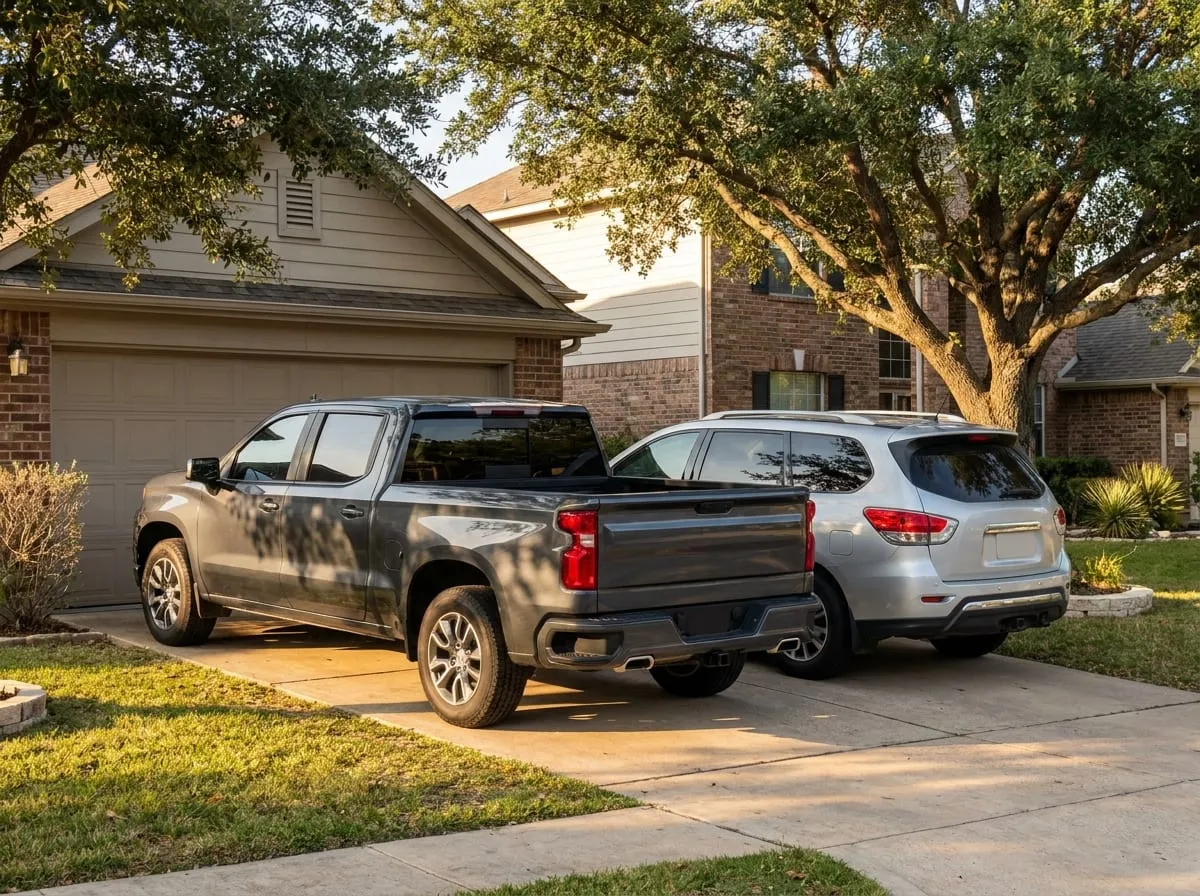
What it covers
- Injuries and property damage you cause to others (liability)
- Damage to your own car from a crash (collision, optional)
- Hail, theft, flood, fire, and animal strikes (comprehensive, optional)
- Your injuries and car damage when the other driver has no insurance or too little (UM/UIM)
- Medical bills and lost wages after a crash, regardless of fault (PIP)
- A rental car while yours is repaired after a covered claim (rental reimbursement, optional)
- Roadside help when you're stuck (towing and labor, optional)
How it works in Texas
The state minimum is 30/60/25. That covers $30,000 in injuries per person, $60,000 per accident, and $25,000 in property damage. It’s cheap because it’s thin. Hospital bills and a newer vehicle can outrun those numbers fast, and anything above the limit comes out of your pocket.
Texas also has two coverages that carriers must offer and you must reject in writing: uninsured/underinsured motorist (UM/UIM) and personal injury protection (PIP). UM/UIM covers you when the other driver has no insurance or not enough. PIP covers your own medical bills and part of your lost wages, no matter who caused the crash. If a quote looks unusually cheap, check whether those two got signed away.
Weather matters here too. Hail is a comprehensive claim, not collision, so if you dropped comprehensive on a paid-off car, a storm isn’t covered.
One more Texas thing: you’re required to show proof of insurance if an officer asks, and when you renew your registration. A digital card on your phone counts at a traffic stop.
What changes your price
- Your driving record and how long you’ve been licensed
- Where the car is parked overnight (ZIP code, garage or street)
- The vehicle itself: repair costs, theft rates, and safety features
- How much you drive and what for
- The limits and deductibles you choose
- Bundling with home or renters
What we’ll ask you
- Driver’s license numbers for everyone in the household who drives
- Year, make, model, and VIN for each vehicle (a photo of the registration works)
- Any tickets or accidents in the past three to five years
- Your current policy’s declarations page, if you have one handy
We’re not going to call you five times. Send what you have, and we’ll come back with options.
Why go through an independent agent
Auto carriers in Texas price the same driver very differently. One might treat a speeding ticket as a minor blip, another might double the rate. One likes teen drivers on a parent’s policy, another doesn’t. We run your information through several carriers at once, so you see those differences instead of guessing.
It’s easy to get a low number online by quietly cutting UM/UIM, PIP, or rental. Our quotes list what each coverage costs so you’re choosing on purpose, and we’re still here next year when a new driver joins the house or you buy a truck.
Common questions
What is the minimum auto insurance in Texas?
Texas requires 30/60/25: $30,000 per person for injuries, $60,000 per accident for injuries, and $25,000 for property damage. That's the legal floor, not a recommendation. One totaled pickup can blow past $25,000, and if you're at fault, the rest could be on you.
What is uninsured/underinsured motorist coverage and do I need it?
UM/UIM pays for your injuries and car damage when the at-fault driver has no insurance or not enough. In Texas, carriers have to offer it, and you have to reject it in writing if you don't want it. We think most people should keep it. It's often a small part of the premium.
What is PIP and why is it on my quote?
Personal injury protection pays your medical bills and some lost wages after a crash, no matter who caused it. Like UM/UIM, Texas requires carriers to offer it and you must reject it in writing to remove it. The minimum carriers have to offer is $2,500, and you can buy more.
Does my auto policy cover hail damage?
Only if you carry comprehensive coverage. Comprehensive handles hail, theft, flood, fire, and hitting a deer. If you own the car outright and skipped it to save money, a spring storm can be an expensive lesson. Ask us what it costs to add.
Will a ticket or accident raise my rate?
Usually, but by how much depends on the carrier. Some are forgiving on a first minor ticket, others aren't. That's a big reason to compare. If you've had an incident recently, tell us and we'll look for carriers that price it more gently.
This page is general information about auto insurance in Texas, not a description of any specific policy. What a policy covers, excludes, and pays is set by the policy documents the carrier issues, which control if anything here differs. Coverage availability and terms vary by carrier and by risk, and can change after this page was written. How we write and check these pages.
Talk to us
Send the form, call, or email. We'll get back to you during business hours.