
What to Do After a Hail Storm in Houston Before Calling a Roofer: The 72-Hour Checklist
Document damage, file your claim, and protect your rights before a contractor knocks. The first 72 hours after Houston hail determine your settlement.
13 minute read. Published September 30, 2026. By Alongside Insurance.
The short version
- Document all visible damage with photos and video, check for interior leaks, cover any holes with tarps, and notify your insurer within 24 hours, even if you haven't decided whether to file a claim yet.
- No. You are not required to have a contractor inspect before filing a claim. Your insurer will send an adjuster to assess damage independently, and you can get contractor bids after the adjuster's report.
- If you see dents on metal vents, missing shingle granules, cracked siding, or broken windows, the damage likely exceeds cosmetic wear. Compare estimated repair costs to your wind/hail deductible before filing.
- Standard HO-3 policies cover hail damage to your roof, siding, windows, and HVAC under Coverage A (dwelling) and Coverage B (other structures), minus your wind/hail deductible. Temporary repairs to prevent further damage are covered under your duty to mitigate.
- File a claim when repair costs clearly exceed your deductible and you have documented evidence of functional damage. Texas policies require prompt notice of loss, and many impose reporting deadlines.
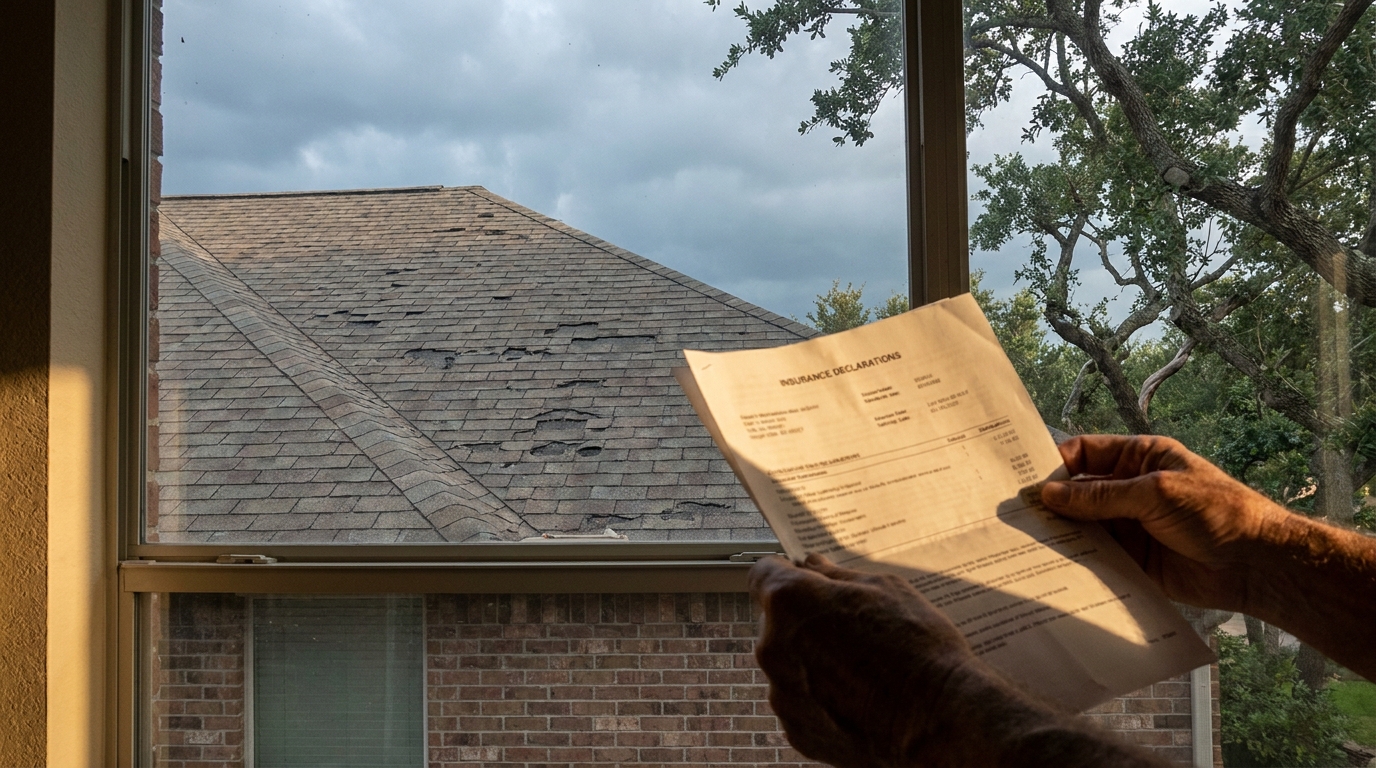
What Should You Do in the First 24 Hours After a Hail Storm in Houston?
Document all visible damage with photos and video, check for interior leaks, cover any holes with tarps, and notify your insurer within 24 hours, even if you haven’t decided whether to file a claim yet.
Knowing what to do after a hail storm in Houston before calling a roofer can mean the difference between a smooth claim and a costly mistake. The first 24 hours are about preserving evidence, preventing further damage, and understanding your coverage. They are not about signing a roofing contract.
Take Time-Stamped Photos and Video of Every Surface
Walk the perimeter of your home and photograph all four sides, plus gutters, downspouts, flashing, vents, siding, screens, fencing, and your A/C condenser fins. Houston-area roofing guidance recommends photographing everything from ground level before anyone climbs on the roof, because the goal is to preserve evidence and avoid unnecessary risk. [Source: Roof.day]
Common hail indicators to look for include:
-
Granule loss collecting in gutters and downspouts
-
Bruised or dark spots on asphalt shingles
-
Cracked, missing, or lifted shingles
-
Dented metal flashing, vent caps, and gutters
-
Dents on soft metals like the A/C condenser fins
Record the storm date and time. Time-stamped photos matched to hail reports and radar archives strengthen your documentation if you do file a claim later.
Check Your Attic and Ceilings for Water Intrusion
Look for water stains, damp insulation, ceiling spots, or active leaks in attic spaces and upper floors. Interior staining can mean the roof has already been breached. If you see sagging ceilings, standing water near electrical areas, or obvious structural damage, stay away from that area and call for emergency help.
Make Temporary Repairs to Prevent Further Damage (Keep Receipts)
If hail broke a window or punched a hole, cover it with a tarp or plywood. Your Texas homeowners policy includes a duty to mitigate, which means you’re expected to take reasonable steps to prevent further damage. Tarping a hole is not an admission of damage. It’s a requirement. Keep every receipt for materials and labor. Your policy typically reimburses reasonable temporary repair costs.
Call Your Insurance Company to Report the Event (Not File a Claim Yet)
The Texas Department of Insurance says to call your agent or company as soon as possible after the storm. [Source: Texas Department of Insurance] Reporting a loss event is not the same as filing a formal claim. You’re putting your insurer on notice that something happened. This protects your timeline without committing you to a claim you may not need.
Do You Have to Let a Roofer Inspect Before You Call Your Insurance Company?
No. You are not required to have a contractor inspect before filing a claim. Your insurer will send an adjuster to assess damage independently, and you can get contractor bids after the adjuster’s report.
Why Storm-Chasing Roofers Knock Immediately After Hail
Within hours of a hail event in Harris or Montgomery County, roofers start knocking on doors. Many are out-of-town contractors who follow storm paths across the state. They’re working on volume and urgency. Their business model depends on signing contracts quickly, before you’ve had time to review your policy or call your insurer.
A good roofer should help you document damage and explain whether the evidence supports an insurance claim, rather than pushing you to sign immediately. [Source: Roof.day]
The Risk of Signing a Contract Before You Know Your Coverage
If you sign a roofing contract before you understand your percentage wind/hail deductibles, you may be locked into a project that your insurance payout won’t fully cover. Wind/hail deductibles in Texas commonly range from 1% to 2% of dwelling coverage, and some carriers go up to 5% in higher-risk areas. [Source: Texas Department of Insurance]
Here’s a hypothetical example. If your home is insured for $400,000 under Coverage A and your wind/hail deductible is 2%, you pay the first $8,000 before insurance pays anything. If the total roof damage is $7,500, you’d be paying the entire repair out of pocket, and you’d have a claim on your record for nothing.
What “Assignment of Benefits” Means and Why You Should Never Sign It
An assignment of benefits (AOB) clause in a roofing contract transfers your insurance rights to the contractor. That means the roofer, not you, controls communication with your insurer, negotiates the settlement amount, and decides whether to accept or dispute the payout. Review any contract for assignment of benefits, direction-to-pay clauses, cancellation penalties, or language that gives the contractor control over your insurance claim. [Source: Roof.day]
Once you sign an AOB, getting that control back can be difficult. Read every line before you sign anything.
How Do You Know If the Hail Damage Is Severe Enough to File a Claim?
If you see dents on metal vents, missing shingle granules, cracked siding, or broken windows, the damage likely exceeds cosmetic wear. Compare estimated repair costs to your wind/hail deductible before filing.
What Hail Damage Looks Like on Asphalt Shingles vs Metal Roofs
On asphalt shingles, hail typically leaves dark bruises where granules have been knocked loose. You may also see cracked shingles, lifted edges, or exposed fiberglass mat. On metal roofs, look for round dents, especially on softer metals like aluminum flashing and vent caps. Dents on your A/C condenser, mailbox, or car hood can confirm the hail was large enough to cause roof damage too.
When Cosmetic Damage Doesn’t Trigger a Payout
Some policies distinguish between cosmetic damage and functional damage. A dent that doesn’t affect the shingle’s ability to shed water may be classified as cosmetic. Many Texas homeowners policies exclude cosmetic hail damage or limit payouts for it. Check your policy language or your declarations page for a cosmetic damage exclusion before assuming the claim will pay.
How Your Percentage Wind/Hail Deductible Affects the Math
The table below shows how different deductible percentages change your out-of-pocket cost on a hypothetical $350,000 Coverage A policy:
| Wind/Hail Deductible % | Deductible Amount (on $350,000 Coverage A) | Hypothetical Repair Cost | Insurance Pays |
|---|---|---|---|
| 1% | $3,500 | $12,000 | $8,500 |
| 2% | $7,000 | $12,000 | $5,000 |
| 5% | $17,500 | $12,000 | $0 |
At a 5% deductible, a $12,000 repair wouldn’t trigger any insurance payment at all. This is why understanding your deductible before you file is critical. Wind/hail deductibles in Texas commonly range from 1% to 2%, though some carriers apply up to 5% in higher-risk areas. [Source: Texas Department of Insurance]
What Does Your Texas Homeowners Policy Cover After a Hail Storm?
Standard HO-3 policies cover hail damage to your roof, siding, windows, and HVAC under Coverage A (dwelling) and Coverage B (other structures), minus your wind/hail deductible. Temporary repairs to prevent further damage are covered under your duty to mitigate.
Texas guidance confirms that wind and hail are usually covered for inland properties. [Source: Texas Department of Insurance] Coastal properties in the designated catastrophe area may need separate windstorm coverage through TWIA.
Roof Damage: RCV vs ACV Settlement and Roof Age Schedules
How your insurer pays for a damaged roof depends on whether your policy settles on a replacement cost value (RCV) or actual cash value (ACV) basis. RCV pays what it costs to replace the roof with similar materials. ACV deducts depreciation based on the roof’s age and condition. Many Texas carriers apply roof age schedules that shift from RCV to ACV once a roof passes a certain age threshold, often 10 or 15 years.
If your roof is older, check your policy or declarations page for an ACV vs RCV settlement endorsement. The difference can be thousands of dollars on the same claim.
Siding, Gutters, and Fence Damage Under Coverage A and B
Coverage A (dwelling) typically covers siding, gutters, and attached structures. Coverage B (other structures) covers detached fences, sheds, and detached garages. Both are subject to your wind/hail deductible. Document damage to every structure on your property, not just the roof.
Interior Damage from Leaks: When Coverage C Applies
If hail breaches the roof and water damages your furniture, electronics, or personal belongings, Coverage C (personal property) may apply. The key is that the water entered through storm damage, not through a pre-existing maintenance issue. Photograph water stains and damaged items immediately.
Temporary Repairs and Your Duty to Mitigate Loss
Your policy expects you to take reasonable steps to prevent further damage. Tarping a damaged section, boarding up a broken window, or placing buckets under an active leak all count. Keep receipts. These costs are typically reimbursable as part of your claim, separate from your deductible.
When Should You File a Hail Damage Claim in Texas?
File a claim when repair costs clearly exceed your deductible and you have documented evidence of functional damage. Texas policies require prompt notice of loss, and many impose reporting deadlines.
The Difference Between Reporting a Loss and Filing a Claim
Reporting a loss means telling your insurer that a storm event occurred and you may have damage. Filing a claim means formally requesting payment. You can report without filing. This preserves your timeline while you assess whether the damage justifies a claim.
How Long You Have to File Under Texas Law
Many Texas homeowners policies require prompt reporting, and some impose deadlines, often within a year of the date of loss. Don’t confuse your policy’s reporting deadline with the broader legal deadline for disputing a denied or underpaid claim, which may be different. Check your specific policy language for its reporting window, and consult an attorney if you believe your insurer mishandled your claim.
Why Filing a Claim You Later Withdraw Still Counts as a Claim
Once you file a formal claim, it goes on your claims history, even if you withdraw it or the insurer denies it. Future carriers can see that claim when pricing your renewal or new policy. This is another reason to assess your deductible math before you file, not after. If you’re unsure how a claim might affect your next renewal, review what to check before you renew.
What Happens After You File a Hail Damage Claim?
Your insurer assigns an adjuster who inspects the damage, writes an estimate, and issues an initial payment minus your deductible. You can then get contractor bids, and the insurer pays the remaining balance after repairs are complete.
The Texas Department of Insurance says to call your agent or company as soon as possible after the storm. [Source: Texas Department of Insurance] The insurer then accepts, denies, or requests more information and, if approved, issues payment according to Texas prompt-payment rules. [Source: Roofdaddyroofing]
The Adjuster’s Inspection: What They Look For and How Long It Takes
The adjuster will examine your roof, siding, windows, HVAC, fencing, and interior areas you reported. They’ll compare what they see to your time-stamped photos. Texas law sets deadlines for the insurer to acknowledge and act on your claim. After a widespread storm, adjusters may be backed up, so your documentation from day one becomes even more important.
How the Initial Payment (ACV) and Final Payment (RCV) Work
If your policy settles on an RCV basis, the insurer typically sends an initial payment based on actual cash value (the depreciated amount) minus your deductible. After you complete repairs, you submit the final invoice, and the insurer releases the remaining “recoverable depreciation” up to the full replacement cost. If your policy is ACV-only, the initial payment is the final payment.
What to Do If the Adjuster’s Estimate Is Lower Than Your Contractor’s Bid
Disagreements happen. If your contractor’s bid is higher than the adjuster’s estimate, you can:
-
Ask the adjuster to review specific line items where the estimates differ.
-
Request a re-inspection with both the adjuster and contractor present.
-
Invoke your policy’s appraisal clause, which allows both sides to hire independent appraisers and a neutral umpire to settle the dispute.
-
Contact the Texas Department of Insurance if you believe the claim was handled improperly.
How Do You Choose a Roofer After a Houston Hail Storm?
Get three written bids after your adjuster’s report, verify the contractor’s credentials and insurance, and never sign a contract that includes an assignment of benefits clause or language allowing the roofer to file claims on your behalf.
Red Flags: Storm Chasers, Unvetted Contractors, and AOB Clauses
Prefer a contractor with a verifiable local office and recent Houston-area storm work, not a temporary storm chaser. [Source: Roof.day] Watch for these red flags:
-
No local address or only a P.O. box
-
Pressure to sign before you’ve talked to your insurer
-
Offers to “waive your deductible” (industry practitioners widely consider this a serious red flag, and it may violate Texas law)
-
Contracts with AOB or direction-to-pay language
-
No written inspection report, only a verbal estimate
How to Verify a Roofing Contractor’s Credentials
Before hiring any roofer, ask for proof of general liability insurance and workers’ compensation coverage. Request references from recent Houston-area projects and confirm the contractor has a verifiable local business presence. Licensing and registration requirements can vary by locality, so check with your city or county for any applicable permit or registration rules. If a contractor can’t produce proof of insurance or local references, move on.
Why You Should Get Bids After the Adjuster’s Report, Not Before
The adjuster’s report gives you a baseline scope of work and dollar amount. When you get contractor bids after the report, you can compare them line by line against the adjuster’s estimate. This puts you in a stronger position to negotiate if there’s a gap. Getting bids first, before you know what the insurer will cover, leaves you negotiating blind.
What Are the Most Common Mistakes Houston Homeowners Make After Hail Damage?
Signing a roofing contract before filing a claim, not documenting damage immediately, making permanent repairs before the adjuster inspects, and assuming cosmetic damage will be covered without checking their deductible threshold.
Here’s a quick summary of the mistakes and how to avoid them:
-
Signing a contract the same day a roofer knocks. You have time. Use it to call your insurer and review your policy first.
-
Not taking photos before cleanup. Once debris is cleared or temporary repairs are made, the original evidence is harder to reconstruct.
-
Making permanent repairs before the adjuster visits. The adjuster needs to see the damage. Temporary repairs are fine. A full re-roof before inspection is not.
-
Filing a claim for damage that falls below the deductible. You end up with a claim on your record and no payout.
-
Signing an AOB without reading it. You lose control of your claim and your settlement.
If you’re not sure whether your damage meets your deductible or what your policy will pay, send us your declarations page or start a quote. We’ll walk you through your coverage in plain English, whether or not you switch.
Frequently Asked Questions
These are the questions Houston homeowners in Spring, Klein, The Woodlands, Cypress, and Humble ask most often after a hail storm hits their neighborhood.
Do I have to let a roofer on my roof before I call my insurance company?
No. Your insurer will send its own adjuster. You can document damage from the ground with photos and video, then get contractor bids after the adjuster’s report. You don’t need a roofer’s inspection to start the process.
How long do I have to file a hail damage claim in Texas?
Many Texas homeowners policies require prompt notice of loss, and some impose deadlines, often within a year of the date of loss. Your policy may also have a separate legal deadline for disputing a denied or underpaid claim. Check your specific policy for its reporting deadline, and consult an attorney if you need to dispute a claim decision.
What is a percentage wind/hail deductible?
It’s a deductible calculated as a percentage of your Coverage A (dwelling) amount, not a flat dollar figure. Wind/hail deductibles in Texas commonly range from 1% to 2%, and some carriers apply up to 5%. On a $400,000 policy with a 2% deductible, you’d pay the first $8,000 out of pocket. [Source: Texas Department of Insurance]
Will tarping my roof hurt my insurance claim?
No. Tarping is a temporary repair that prevents further damage. Your policy’s duty-to-mitigate clause expects you to take reasonable steps like this. Keep your receipts, because temporary repair costs are typically reimbursable.
What is assignment of benefits and why should I avoid it?
An assignment of benefits (AOB) transfers your insurance claim rights to a contractor. The roofer then controls negotiations with your insurer, decides whether to accept or dispute the payout, and may pursue litigation in your name. Once signed, it’s difficult to reverse.
Does filing a claim I later withdraw still show on my record?
Yes. Once a formal claim is filed, it appears in your claims history even if you withdraw it or the insurer denies it. Future carriers can see it when pricing your policy. This is why it’s important to assess whether damage exceeds your deductible before filing.
What’s the difference between RCV and ACV on a roof claim?
Replacement cost value (RCV) pays what it costs to replace the roof with similar materials. Actual cash value (ACV) deducts depreciation based on the roof’s age and condition. Many Texas carriers apply roof age schedules that shift from RCV to ACV after the roof reaches a certain age. The difference can be thousands of dollars on the same claim. Learn more about ACV vs RCV settlement.
Can a roofer legally waive my deductible in Texas?
Industry practitioners widely consider deductible-waiver offers a serious red flag. Many Texas insurance professionals warn that such arrangements can create problems with your claim and may expose both the homeowner and the contractor to legal risk. If a contractor offers to “cover your deductible,” treat it as a warning sign, not a favor.
Related guides
Want a quote that accounts for this?
Start a quote or email us your declarations page, and we'll compare carriers for you.
Get a quoteOr read about home insurance in Texas first.
Sources
This guide is general information about Texas insurance as of the date above, not advice about your specific policy. Laws, rates, and carrier rules change, and your policy documents control if anything here differs. Spot an error? Email hello@alongsideinsurance.com and we'll fix it. How we write these guides.