
Texas UM/UIM and PIP Coverage: Why You Must Reject in Writing (and What Happens If You Don't)
Texas law requires written rejection of UM/UIM and PIP auto coverage. Learn what these coverages do, how to reject them legally, and why most agents say don't.
11 minute read. Published September 21, 2026. By Alongside Insurance.
The short version
- UM/UIM pays your medical bills and lost wages when an at-fault driver has no insurance or too little. PIP pays your medical bills regardless of fault, up to your policy limit.
- Sign the rejection-of-coverage form your carrier or agent provides. The form names the specific coverage you're declining and includes your signature and the date. Keep a copy for your records.
- If you reject UM/UIM and an uninsured driver injures you, your only recovery is from the at-fault driver personally. That often means no recovery at all, because uninsured drivers rarely have assets to pay a judgment. [ Source: Cooper & Scully ]
- If you reject PIP, you rely on your health insurance or the at-fault driver's liability coverage to pay your medical bills. That can leave gaps if fault is disputed or the other driver is uninsured.
- Yes. You can add UM/UIM or PIP back at any renewal or mid-term by requesting the coverage in writing. The carrier must offer it again, and no new rejection form is needed if you accept.
What Are UM/UIM and PIP Coverage in Texas Auto Insurance?
UM/UIM pays your medical bills and lost wages when an at-fault driver has no insurance or too little. PIP pays your medical bills regardless of fault, up to your policy limit.
If you’re reviewing a Texas auto insurance quote or renewal, you’ve probably noticed line items for UM/UIM and PIP. Understanding texas um uim and pip coverage reject in writing rules is essential before you sign anything, because these coverages work very differently from your liability, collision, or comprehensive lines.
Uninsured Motorist (UM) and Underinsured Motorist (UIM) Bodily Injury
UM (Uninsured Motorist) applies when the at-fault driver carries no liability insurance at all. That includes many hit-and-run situations where the driver can’t be identified. UIM (Underinsured Motorist) kicks in when the at-fault driver has insurance, but the limits are too low to fully cover your damages. Think of UIM as “gap” coverage. [Source: Texas Legal Guide]
Texas also offers UM/UIM property damage coverage, which carries a $250 deductible. [Source: Texas Legal Guide] Your UM/UIM bodily injury and UM/UIM property damage can be selected or rejected separately.
Personal Injury Protection (PIP)
PIP is a no-fault coverage. It helps pay medical bills and certain injury-related expenses after a crash, regardless of who caused it. Texas insurers must offer a default of $2,500 in PIP, with options up to $10,000. [Source: Casemine] Because PIP pays without waiting for a fault determination, it can cover your bills quickly while a liability claim is still being sorted out.
How These Coverages Differ from Liability and Collision
Your liability coverage pays the other driver’s bills when you’re at fault. Collision pays to repair your own vehicle after a crash, regardless of fault, minus your deductible. UM/UIM and PIP are different: they protect you (and your passengers) when someone else causes the wreck and either has no insurance or not enough. Here’s a quick comparison:
| Coverage | Who It Pays | Fault Required? | What It Covers |
|---|---|---|---|
| Liability (BI/PD) | Other driver | You must be at fault | Their medical bills, property damage |
| Collision | You | No | Your vehicle repairs (minus deductible) |
| UM/UIM BI | You | Other driver at fault, uninsured or underinsured | Your medical bills, lost wages, pain/suffering |
| UM/UIM PD | You | Other driver at fault, uninsured | Your vehicle repairs ($250 deductible) |
| PIP | You | No (no-fault) | Your medical bills, some lost income |
Why Does Texas Law Require Written Rejection?
Texas law requires carriers to offer UM/UIM and PIP on every private passenger auto policy. Under Texas Insurance Code § 1952.101, UM/UIM coverage “does not apply” if a named insured “rejects the coverage in writing.” [Source: FindLaw] A similar written-rejection framework applies to PIP. These are mandatory offers, not mandatory purchases. You don’t have to buy them, but you can’t casually wave them away, either.
What Counts as a Valid Written Rejection
Texas courts have said the statute does not require special language or a special procedure. It does require a valid written rejection by the named insured. [Source: FindLaw] In practice, that means a signed form, on paper or electronically, that identifies the specific coverage being declined and is attributable to a named insured on the policy. A verbal “no thanks” on the phone is not enough. An unsigned quote showing $0 for UM/UIM is not enough.
Texas Department of Insurance checklists confirm that UM/UIM and PIP rejection forms are not subject to TDI approval and are not part of the policy itself. They’re a separate document. [Source: ATX Litigation]
What Happens If You Don’t Sign the Rejection Form
If there is no valid written rejection on file, UM/UIM coverage exists as a matter of law. Texas appellate courts have held that absent a written rejection, the policy will include at least the statutory minimum limits. [Source: FindLaw] For UM/UIM, that baseline tracks the Texas 30/60/25 liability minimums: $30,000 per person, $60,000 per accident for bodily injury, and $25,000 for property damage. For PIP, the default is $2,500. [Source: ATX Litigation]
Texas courts have also said the rejection provisions must be strictly construed in favor of coverage. That means if there’s any ambiguity about whether you signed a rejection, the court is likely to rule that the coverage applies. [Source: FindLaw]
How Do You Reject UM/UIM or PIP Coverage in Writing?
Sign the rejection-of-coverage form your carrier or agent provides. The form names the specific coverage you’re declining and includes your signature and the date. Keep a copy for your records.
The Standard Rejection Form (What It Looks Like)
Some carriers use a single combined form for both UM/UIM and PIP. Others use separate forms for each. Either way, the form is a standalone document, not a checkbox buried in your application. It typically states the coverage being offered, the limits available, and a line for the named insured’s signature and date. The rejection can be on a one-line signature form, but the legal requirement is that it be in writing and attributable to a named insured. [Source: Casemine]
Rejecting at Quote Time vs. at Renewal
You can sign a rejection form when you first buy the policy or at renewal. After a valid written rejection, the insurer generally does not have to re-offer the same coverage on renewal unless you later request it in writing. [Source: Casemine] That means one signed rejection can carry forward through multiple policy terms. If you change carriers, the new carrier must offer the coverage again and obtain a new rejection form if you want to decline.
Can You Reject One Coverage but Keep the Other?
Yes. UM/UIM and PIP are separate coverages with separate rejection requirements. You can keep UM/UIM and reject PIP, or vice versa. You can also keep UM/UIM bodily injury but reject UM/UIM property damage. Each election is independent.
One important limit rule: your UM/UIM limits cannot exceed your liability limits. If you carry 100/300 liability, you can choose UM/UIM at 100/300 or lower, but not higher.
What Happens If You Reject UM/UIM Coverage?
If you reject UM/UIM and an uninsured driver injures you, your only recovery is from the at-fault driver personally. That often means no recovery at all, because uninsured drivers rarely have assets to pay a judgment. [Source: Cooper & Scully]
Scenario: Hit by an Uninsured Driver in Spring, TX
Imagine you’re driving on Spring Cypress Road and an uninsured driver runs a red light and hits you. You have $45,000 in medical bills and six weeks of lost wages. If you rejected UM/UIM in writing, your auto policy won’t pay those costs. You could sue the at-fault driver, but collecting from someone who couldn’t afford insurance in the first place is, practically speaking, unlikely. Your health insurance might cover some medical bills, but it won’t cover lost wages or pain and suffering.
If you had kept UM/UIM at, say, 100/300 limits, your own policy would step in and pay up to $100,000 per person for those same losses.
Why Most Agents Recommend Keeping UM/UIM
The math is straightforward. Uninsured drivers are common in Texas, and the cost of UM/UIM is relatively modest compared to the exposure. When we review policies at Alongside Insurance, we walk through the rejection form before anyone signs it and explain exactly what they’re giving up.
The Uninsured Motorist Rate in Texas
According to MoneyGeek, Texas has an uninsured motorist rate of roughly 14.5%. [Source: Cooper & Scully] That means roughly one in seven drivers on the road around you may have no liability insurance. By some estimates, a significant number of state-registered vehicles are not matched to an insurance policy. Either way, the odds of encountering an uninsured driver in Harris or Montgomery County are not trivial.
What Happens If You Reject PIP Coverage?
If you reject PIP, you rely on your health insurance or the at-fault driver’s liability coverage to pay your medical bills. That can leave gaps if fault is disputed or the other driver is uninsured.
When PIP Pays (Regardless of Fault)
PIP doesn’t wait for anyone to determine fault. If you’re hurt in a crash, PIP pays your covered medical expenses up to your limit, whether you caused the accident or not. That speed matters when you need an MRI next week and can’t wait months for a liability claim to settle.
PIP vs. Health Insurance: Which Pays First?
Policy language varies by carrier, but PIP generally coordinates with your health insurance. In many cases, PIP can cover deductibles and copays that your health plan doesn’t pay. It can also cover expenses your health plan excludes, like certain chiropractic visits. If you have no health insurance, PIP becomes your primary source of medical-bill payment after a crash.
Why Some Drivers Reject PIP (and the Risk)
Some drivers with strong employer-sponsored health plans feel PIP is redundant. That’s a reasonable calculation, but it ignores two things: health insurance doesn’t pay lost wages, and health insurance subrogation clauses can complicate your recovery. If you reject PIP in writing, your auto policy generally will not include PIP benefits, and the insurer does not have to add PIP to later renewal policies unless you later request it in writing. [Source: Casemine]
Can You Add UM/UIM or PIP Back After You Reject It?
Yes. You can add UM/UIM or PIP back at any renewal or mid-term by requesting the coverage in writing. The carrier must offer it again, and no new rejection form is needed if you accept.
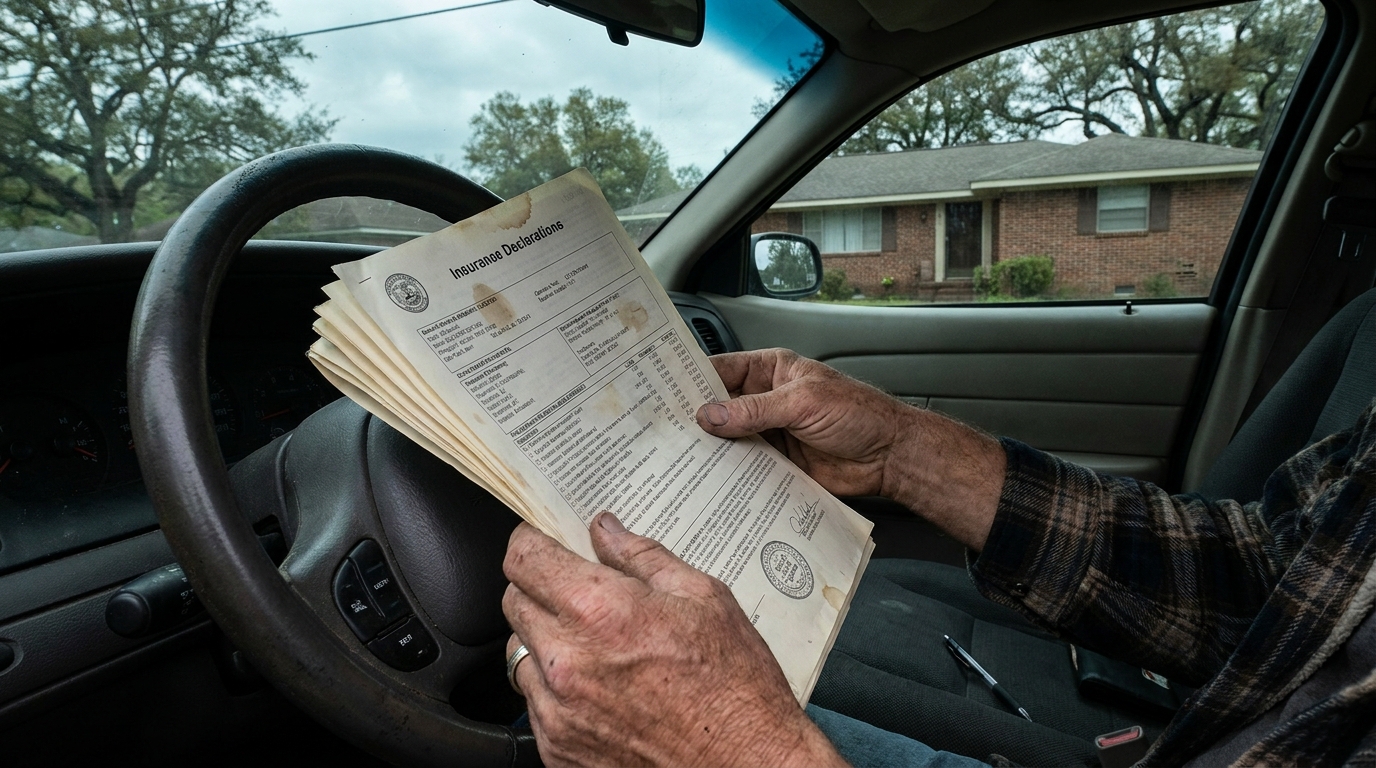
The process is simple: contact your agent or carrier in writing and request the coverage. The insurer will add it to your policy, adjust your premium, and issue an updated declarations page. You can verify the change by checking your dec page for the new coverage lines and limits. If you’re not sure how to read that document, our guide on how to read your declarations page walks through the format (the auto dec page follows a similar structure).
How Much Do UM/UIM and PIP Cost in Texas?
UM/UIM typically adds a modest amount to your liability premium. PIP adds a flat premium based on your chosen limit. Multiple Texas guides report PIP at $2,500 commonly costs in the range of $20 to $60 per year, while UM/UIM bodily injury costs more as limits rise. [Source: ATX Litigation]
Typical Premium Impact (Worked Example)
Here’s a hypothetical example for a driver in Spring, TX carrying 100/300/100 liability limits:
| Coverage | Limits | Hypothetical 6-Month Cost |
|---|---|---|
| Liability (BI/PD) | 100/300/100 | $480 |
| UM/UIM Bodily Injury | 100/300 | $66 – $114 |
| PIP | $2,500 | $15 – $45 |
| Total with UM/UIM + PIP | $561 – $639 |
Texas guides report a range of costs depending on limits and insurer. For UM/UIM bodily injury at 30/60 limits, some sources cite roughly $40 to $80 per year, while 100/300 limits may run roughly $80 to $150 per year. PIP at $2,500 is often quoted at roughly $5 to $15 per month. [Source: ATX Litigation] Your actual premium depends on your driving record, vehicle, ZIP code, and carrier.
Why UM/UIM Is Usually Cheaper Than You Think
Because UM/UIM only pays when someone else is at fault and that person is uninsured or underinsured, the claims frequency is lower than liability. That keeps the premium relatively low. For many Texas drivers, adding 100/300 UM/UIM costs less per month than a streaming subscription. Compared to the potential $100,000-plus in medical bills from a serious crash with an uninsured driver, the math favors keeping the coverage.
What Should You Do If Your Agent Didn’t Give You a Rejection Form?
Request a signed rejection form immediately and keep a copy. If the carrier added UM/UIM or PIP without your written consent, file a complaint with the Texas Department of Insurance and ask for a corrected policy. [Source: ATX Litigation]
If you’re on the other side of the problem, meaning you wanted to reject coverage but were never given a form, the coverage may still be on your policy (and you may be paying for it). Check your declarations page. If UM/UIM or PIP is listed with limits and a premium, you have the coverage. If it shows $0 or is missing entirely, that’s evidence it may have been rejected, but without a signed form on file, the legal status is uncertain.
Here’s a practical step: send your agent or carrier a written request using language like this:
“Please send me copies of every signed UM/UIM and PIP rejection form in my file, along with my full declarations page and any endorsements showing the coverages on my policy.”
If the insurer cannot produce a valid written rejection, Texas courts have held that UM/UIM and PIP coverage can exist as a matter of law. [Source: FindLaw] That strict-construction standard works in your favor as the insured. If the company refuses to provide the form or cannot prove a valid rejection, escalate by filing a complaint with TDI.
Frequently Asked Questions
These are the questions Texas drivers ask most often about UM/UIM and PIP rejection rules.
Can I reject UM/UIM or PIP verbally in Texas?
No. Texas Insurance Code § 1952.101 requires the rejection to be in writing. A verbal decline on the phone or in person is not a valid rejection. [Source: FindLaw]
What happens if my carrier can’t find my signed rejection form?
If the insurer cannot produce a valid written rejection, Texas courts have held that UM/UIM coverage exists as a matter of law at the statutory minimum limits. The rejection provisions are strictly construed in favor of coverage. [Source: FindLaw]
Do I have to sign a new rejection form every time I renew?
Generally, no. After a valid written rejection, the insurer is not required to re-offer the coverage on renewal unless you later request it in writing. [Source: Casemine] If you switch to a new carrier, that carrier must offer the coverage again and obtain a new rejection if you decline.
Can my UM/UIM limits be higher than my liability limits?
No. In Texas, your UM/UIM limits cannot exceed your liability limits. If you carry 100/300 liability, you can select UM/UIM at 100/300 or any lower amount, but not above 100/300.
What is the default PIP amount in Texas if I don’t reject it?
The standard default is $2,500 of PIP coverage. Insurers may offer higher limits up to $10,000. [Source: Casemine]
How much does UM/UIM typically cost in Texas?
Costs vary by carrier, driving record, and ZIP code. Texas guides commonly report UM/UIM bodily injury at 30/60 limits in the range of $40 to $80 per year, with 100/300 limits running higher. PIP at $2,500 is often quoted at roughly $5 to $15 per month. [Source: ATX Litigation]
Does UM/UIM cover hit-and-run accidents?
Yes. UM coverage applies when the at-fault driver has no liability insurance, and that includes many hit-and-run situations where the driver cannot be identified. [Source: Texas Legal Guide]
Is the rejection form part of my insurance policy?
No. Texas Department of Insurance checklists confirm that UM/UIM and PIP rejection forms are not subject to TDI approval and are not part of the policy. They are a separate document. [Source: ATX Litigation]
Related guides
Want a quote that accounts for this?
Start a quote or email us your declarations page, and we'll compare carriers for you.
Get a quoteOr read about auto insurance in Texas first.
Sources
This guide is general information about Texas insurance as of the date above, not advice about your specific policy. Laws, rates, and carrier rules change, and your policy documents control if anything here differs. Spot an error? Email hello@alongsideinsurance.com and we'll fix it. How we write these guides.